
The extension of women’s rights is the basic principle of all social progress.
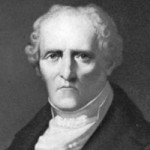
| Birth: | 7th April, 1772 |
| Death: | 10th October, 1837 |
| Nationality: | French |
| Profession: | Philosopher |
Fourier was born in Besançon, France on April 7, 1772. The son of a small businessman, Fourier was more interested in architecture than he was in his father's trade. He wanted to become an engineer, but the local Military Engineering School only accepted sons of noblemen. Fourier later said he was grateful that he did not pursue engineering, because it would have consumed too much of his time and taken away from his true desire to help humanity.
His father died in 1781, and Fourier received two-fifths of his father's estate, valued at more than 200,000 francs. This inheritance enabled Fourier to travel throughout Europe at his leisure. In 1791 he moved from Besançon to Lyon, where he was employed by the merchant M. Bousquet. Fourier's travels also brought him to Paris, where he worked as the head of the Office of Statistics for a few months. Fourier was not satisfied with making journeys on behalf of others for their commercial benefit. Having a desire to seek knowledge in everything he could, Fourier often would change business firms as well as residences in order to explore and experience new things. From 1791 to 1816 Fourier was employed in the cities of Paris, Rouen, Lyon, Marseille, and Bordeaux. As a traveling salesman and correspondence clerk, his research and thought was time-limited: he complained of "serving the knavery of merchants" and the stupefaction of "deceitful and degrading duties". He took up writing, and his first book was published in 1808.
Fourier died in Paris in 1837.

Share with your friends